How Do Matching Fences and Entry Columns Make a Gate Look Finished

Matching fences and entry columns make a gate look finished because they give it a frame and repeat its pattern along the property line. A gate alone looks like a single object stuck into an opening. A gate with columns on each side and a fence that picks up its bar spacing and top line looks like one planned entrance.
Columns frame the opening
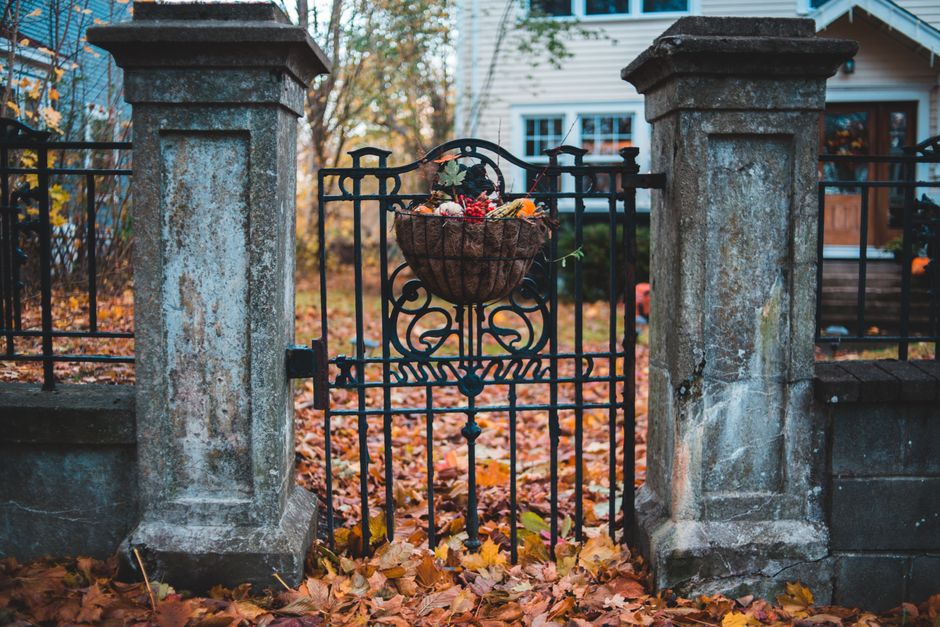
Entry columns stand on each side of a gate and do two jobs. They carry the hinge and latch loads, and they set the visual weight of the entrance. Masonry columns, such as stone or brick, are heavy and steady. Steel columns match an iron gate closely and can be thinner.
The key detail is the footing. A column and its footing weigh a lot, and the gate adds a sideways pull on the hinge side. Limestone soil and clay beneath the surface shift with wet and dry seasons, so a column set on a shallow pad can lean, and the gate follows it. Deep footings, tied into the column with steel, keep both plumb.
- Footings reach below the top layer of soil.
- Column faces sit square to the opening.
- Hinge hardware is set into steel or a solid insert, not loose mortar.
Masonry and steel together
Many entrances use masonry columns with an iron gate between them. The two materials expand and contract at different rates in hot summers and cool nights. A tight fit between the steel gate and a rigid column can bind in summer and open a gap in winter. A small, planned gap on the latch side and adjustable hinges handle that movement.
Fences carry the design along the line
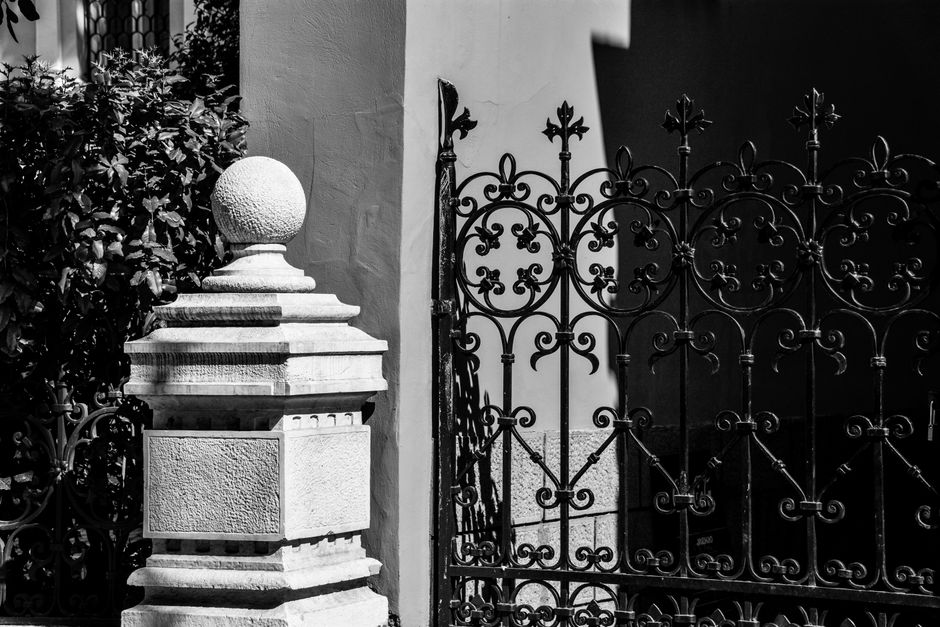
A matching fence extends the gate's look. The pickets share the same bar size and spacing, the top line repeats, and the finials match. The eye reads the whole boundary as one design. When the fence changes style abruptly at the gate, the entrance looks like an afterthought.
Matching does not mean identical. Many properties use a plainer fence with the same bar size and a simple flat top, saving the scrolls and arches for the gate. The pickets still line up in spacing and color, so the two feel related without repeating every detail.
Heights and slopes
The fence and gate should meet at the same height at the column. On a flat lot this is easy. On a sloped lot, common in the hills around Cedar Park, the fence has to step or follow the ground. Stepped fence panels keep each panel level, with a visible rise between sections. A racked fence tilts each panel to follow the slope, which keeps the line smooth but requires pickets that stay plumb while rails tilt.
Either way, the gate top should connect cleanly. If a gate rises as an arch in the center, the fence panels near it often drop to a lower height, so the arch stands out. If the fence stays tall all the way up to the columns, the arch can look crowded.
Finish and color must match
A matching finish is as important as matching shapes. If the gate is a glossy black and the fence is a faded satin black, the difference shows from the street. Panels made at different times can vary slightly, and fences installed years apart often do not match without recoating.
Sun is a factor. Long, hot summers wear a dark finish unevenly, with the south and west faces fading first. A fence that has been outdoors for years will look more worn than a new gate. A touch-up or a full recoat on older sections brings the two closer.
- Choose one color and one sheen for every steel part.
- Use the same coating system on new parts as on old ones.
- Plan a recoat of older fence sections when a new gate goes in.
Planning everything together
Gates, fences, and columns work best when planned as one job. Ordering the gate first and building columns later invites small errors, since a column that ends up a few inches off the planned spot forces the gate to be altered. A single drawing showing the opening, the column size, the fence height, the picket spacing, and the top line prevents most of those errors.
The order of work matters too. Footings come first and need time to cure. Columns or steel posts follow. Fence sections go in next, and the gate is hung last, once everything is plumb and square.
A sample order of work
- Locate buried lines and mark the post and column positions.
- Dig and pour footings, and let the concrete cure.
- Build or set the columns and end posts.
- Install the fence panels and check heights.
- Hang the gate and adjust hinges and latch.
- Touch up the coating and make a final walk-through.
Wind, hail and storms
Wind on open lots pushes on every solid part of an entrance. Fence panels with open pickets let air through, while solid masonry columns take the load without moving. A tall fence on a long run needs posts spaced close enough to resist wind, and the posts need footings as deep as the gate's.
Hail chips coatings on all steel parts, and a long fence has many places for chips to hide. After a storm, a walk along the full fence line, not only the gate, finds damage early. Touching up chips quickly stops rust from creeping under the film.
Where the details show
Small details separate a finished entrance from a rough one. A cap on top of each column sheds water and keeps it out of the masonry. A steel base plate set on a raised pad keeps the posts out of standing water. Gaps between the bottom rail and the ground stay even. Lights, address plates, and a mailbox, if planned early, fit into the columns without cutting finished work.
- Caps on columns, so rain runs off instead of in.
- Raised pads under steel posts.
- Even gaps along the bottom of fence and gate.
- Planned spots for lighting and address plates.
Keeping the whole entrance looking right
Upkeep is simple but should cover every part. Wash the fence and gate once or twice a year to remove dust and pollen. Look at the tops of bars, the bottoms of posts, and the joints between steel and masonry. Check that the gate still swings freely and latches without lifting. Keep sprinklers off the metal and clear soil away from the base of the posts.
Homes near Brushy Creek Lake Park, along Lakeline Boulevard, or within reach of the 183A Toll Road deal with the same long summers and seasonal swings, so the same yearly routine applies throughout the area.
A gate that matches its fence and columns looks planned, and it also works better, because the posts, footings, and finishes were chosen together. Planning the pieces as one entrance, with deep footings, a shared finish, and a clear order of work, gives a result that stays straight and keeps its look through years of Texas weather.